How do leadership diagnostic tools support leadership development?
Future Institute of Australia uses a suite of internally developed leadership diagnostic tools, informed by recognised leadership and behavioural theories and models, to help participants build greater self-awareness and understand how their natural preferences and behaviours may influence the way they lead, communicate and interact with others.
Depending on the program, participants complete leadership online diagnostics tools (self-assessment) across the following areas:
Default Leadership Style
Helps participants identify their default leadership style and consider how effectively they adapt their style to different people, situations and levels of capability. Participants explore the importance of being flexible rather than relying on one leadership approach in every situation.
Preferred Communication Style
Explores how participants prefer to communicate and how their preferred communication style may be perceived by others. It helps leaders recognise that people receive, interpret and respond to communication differently, and builds awareness of when they may need to adapt their approach to communicate more effectively.
Emotional Intelligence Strengths and Areas for Improvement
Provides participants with insight into their emotional intelligence, including their strengths and opportunities for development. It encourages leaders to consider their self-awareness, emotional responses, empathy, relationship management and the impact their emotions and behaviours can have on others.
Response to Conflict
Helps participants understand their default response when faced with conflict or disagreement. Leaders explore whether they may naturally avoid, accommodate, compete, compromise or collaborate and consider. This can be particularly valuable when developing confidence in managing conflict and leading difficult conversations.
Learning Style Preferences
Helps participants understand how they process new information, prefer to learn, and engage with new experiences. Recognising different learning preferences can also help leaders consider how members of their team may learn and respond differently when being trained, coached or introduced to change.
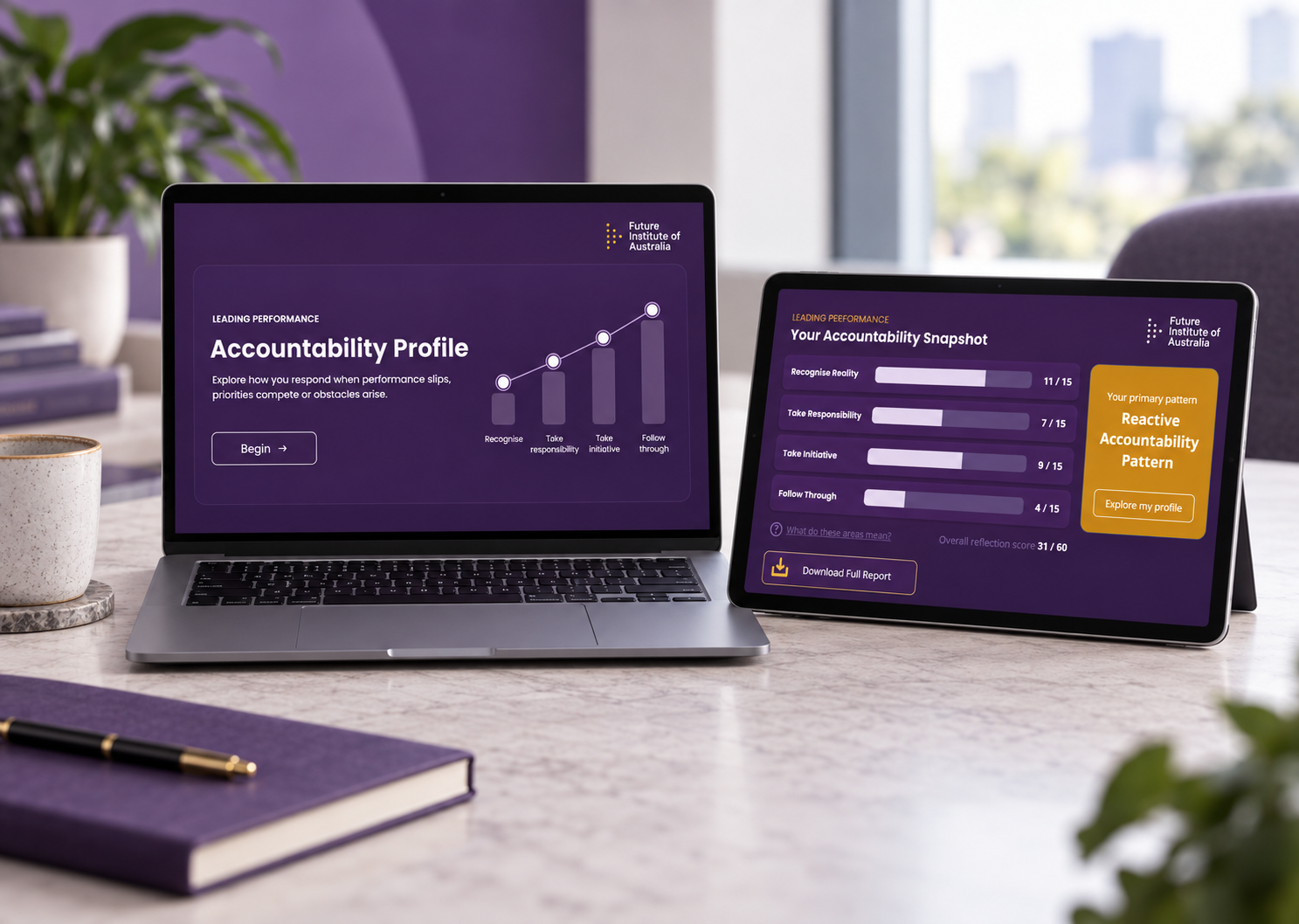
Leading Accountability
Explores how effectively leaders create and maintain accountability within their teams. Participants reflect on behaviours such as setting clear expectations, following through on commitments, providing feedback, addressing underperformance and having difficult conversations. The diagnostic tool can help identify where leaders may unintentionally avoid accountability or where greater confidence and consistency could strengthen team performance.
Leading Safety Behaviours
Helps leaders reflect on the behaviours they demonstrate when leading safety in the workplace. It considers how leadership communication, decision-making, role modelling, accountability and responses to safety concerns can influence the behaviours of others and the broader safety culture. The diagnostic tool encourages leaders to consider not only what they say about safety, but what their everyday leadership behaviours communicate to their teams.