Understanding Communication Styles: The Key to Stronger Teams and Better Performance
In every workplace, communication sits at the centre of performance, culture, and results. Yet despite its importance, many challenges we see in teams don’t come from a lack of skill or intent – they come from differences in how people communicate.
The reality is simple: we don’t all communicate the same way.
Some people focus on relationships, others on results. Some want detail and data, while others prefer fast-paced, high-level conversations. When these differences aren’t understood, they can lead to frustration, misalignment, and reduced effectiveness.
But when they are understood, they become a powerful advantage.
The Four Key Communication Styles
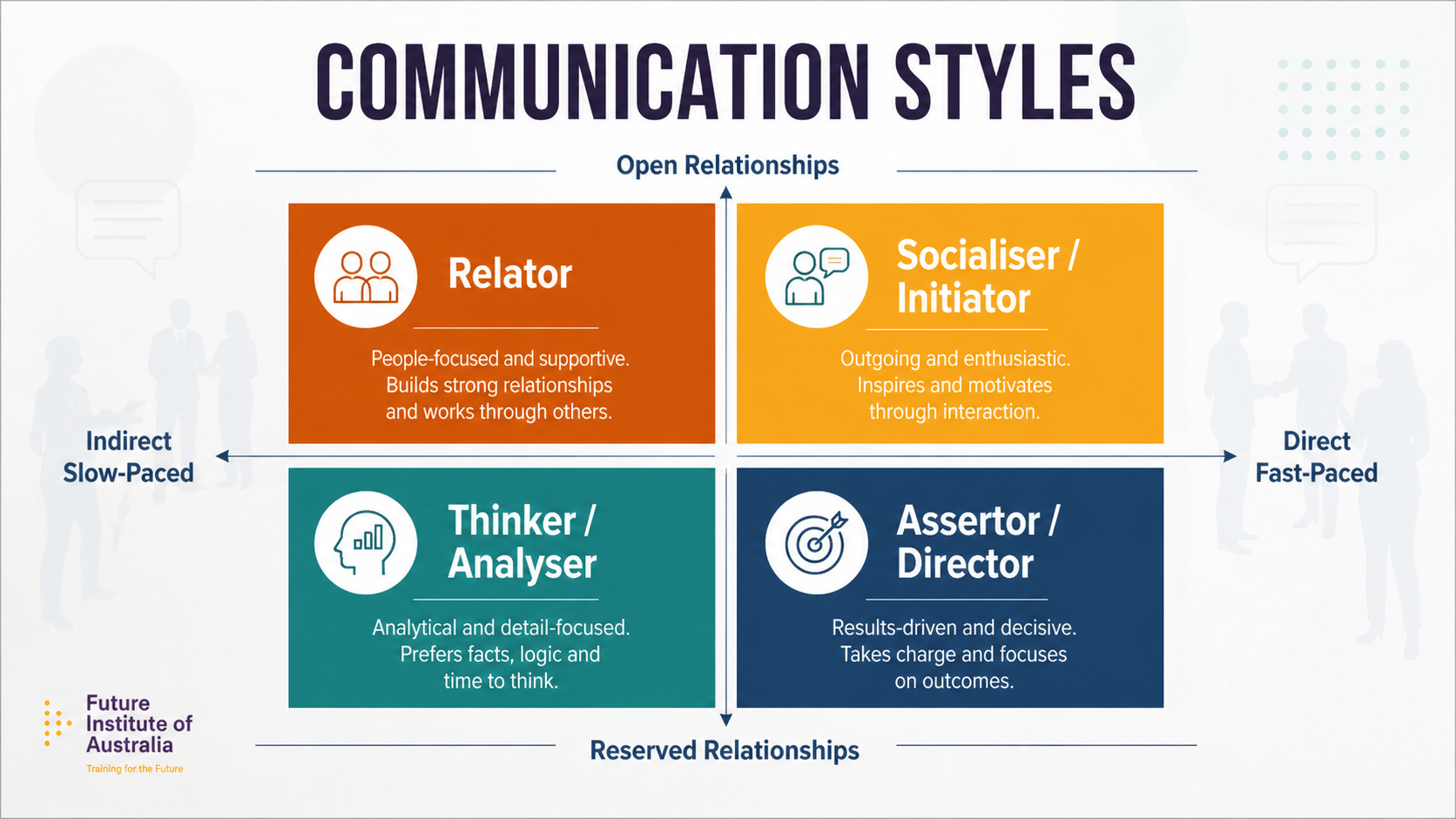
A practical way to understand these differences is through four common communication styles:
- Relator
Relators are relationship-focused. They value trust, collaboration, and personal connection.
They tend to be:
- Supportive and team-oriented
- Good listeners
- Focused on harmony and cooperation
Relators thrive in environments where people feel heard and valued.
- Socialiser / Initiator
Socialisers bring energy and enthusiasm to conversations. They enjoy engaging with others, sharing ideas, and creating momentum.
They tend to be:
- Outgoing and expressive
- Big-picture thinkers
- Motivated by interaction and engagement
They are often the drivers of innovation and team energy.
- Thinker / Analyser
Thinkers focus on logic, detail, and accuracy. They want to understand the “why” behind decisions.
They tend to be:
- Analytical and structured
- Detail-oriented
- Thoughtful and measured in their approach
They add depth, rigour, and quality to decision-making.
- Assertor / Director
Assertors are results-driven. They value efficiency, clarity, and action.
They tend to be:
- Direct and decisive
- Focused on outcomes
- Comfortable making quick decisions
They are often the ones who drive progress and execution.
Why Communication Styles Matter
No one style is better than another – but problems arise when we assume everyone communicates the way we do.
For example:
- A direct communicator may come across as abrupt to a Relator
- A Thinker may feel rushed by a fast-paced Assertor
- A Socialiser may overwhelm someone who prefers structured detail
These differences can create friction – but they can also create balance when managed well.
From Awareness to Adaptability
Strong communication isn’t about changing who you are – it’s about adapting your approach to others.
High-performing teams and leaders do three things well:
- They understand their own style
They recognise their natural tendencies, strengths, and potential blind spots.
- They identify others’ styles
They observe how others communicate, make decisions, and engage.
- They adapt their communication
They adjust their tone, pace, level of detail, and approach to suit the situation and the individual.
This is where communication shifts from functional to effective.
Practical Ways to Improve Communication
To apply this in the workplace, consider:
- Adjusting your pace – slow down for detail-oriented thinkers, speed up for action-focused individuals
- Balancing detail and big picture – tailor your message depending on your audience
- Building rapport first – particularly with relationship-focused communicators
- Being clear and concise – especially when working with results-driven individuals
- Asking questions – to better understand how others prefer to engage
Small adjustments can have a significant impact.
The Leadership Advantage
For leaders, understanding communication styles is not optional – it’s essential.
Leaders who adapt their communication:
- Build stronger relationships
- Reduce misunderstandings and conflict
- Improve engagement and trust
- Drive better performance outcomes
They don’t rely on one approach – they flex their style to meet the needs of their team.