A signed induction doesn’t prove understanding
Inductions are an essential part of preparing people to work safely. But in many organisations, the induction process has become more focused on getting people through the content than making sure they understand it.
A worker watches a presentation, reads several pages of information, answers a few basic questions and signs a form.
The induction is recorded as complete—but is the worker genuinely ready to enter the workplace?
Can they recognise the site’s hazards? Do they understand the controls? Would they know what to do in an emergency? Can they apply the information when faced with a real situation?
Completion matters, but completion alone does not demonstrate understanding.
The recurring problems behind workplace training
Many organisations are not struggling because they lack training content. They are struggling because their content is difficult to deliver consistently, keep current and apply across different sites, roles and workforces.
Common problems include:
- inconsistent training across sites
- lengthy face-to-face inductions
- procedures that workers do not read or retain
- difficulty training contractors before arrival
- poor visibility of completion
- outdated training following operational, procedural or legislative change
- supervisors repeatedly delivering the same information
- limited evidence that workers understood the material
These are not simply course-development problems. They are recurring operational problems.
They consume supervisors’ time, create additional administration and make it difficult for an organisation to know whether critical information is being delivered—and understood—consistently.
What does WorkSafe WA recommend?
WorkSafe WA describes an induction as an important information-sharing session that familiarises people with the workplace, including its locations, equipment, materials, processes and tasks.
Its guidance says inductions should be tailored and targeted to accommodate employees, contractors and trainees. They should address matters such as workplace hazards, safe work procedures, communication protocols and emergency procedures.
Importantly, WorkSafe WA also states that the person conducting a business or undertaking should ensure workers have understood the necessary information.
This is a much higher standard than confirming that someone attended a session or clicked through a presentation.
The guidance also warns that asking workers to read and sign off on pages of legal or technical information is unlikely to be successful. Overloading people with content that is not relevant to their induction may also prevent them from retaining the information that matters.
You can read the full guidance on the WorkSafe WA effective inductions webpage.
Moving beyond “read and sign”
Workplace information is often written to serve several purposes at once. A procedure may need to provide detailed technical instructions, meet document-control requirements and support the organisation’s safety management system.
That does not necessarily make it an effective learning resource.
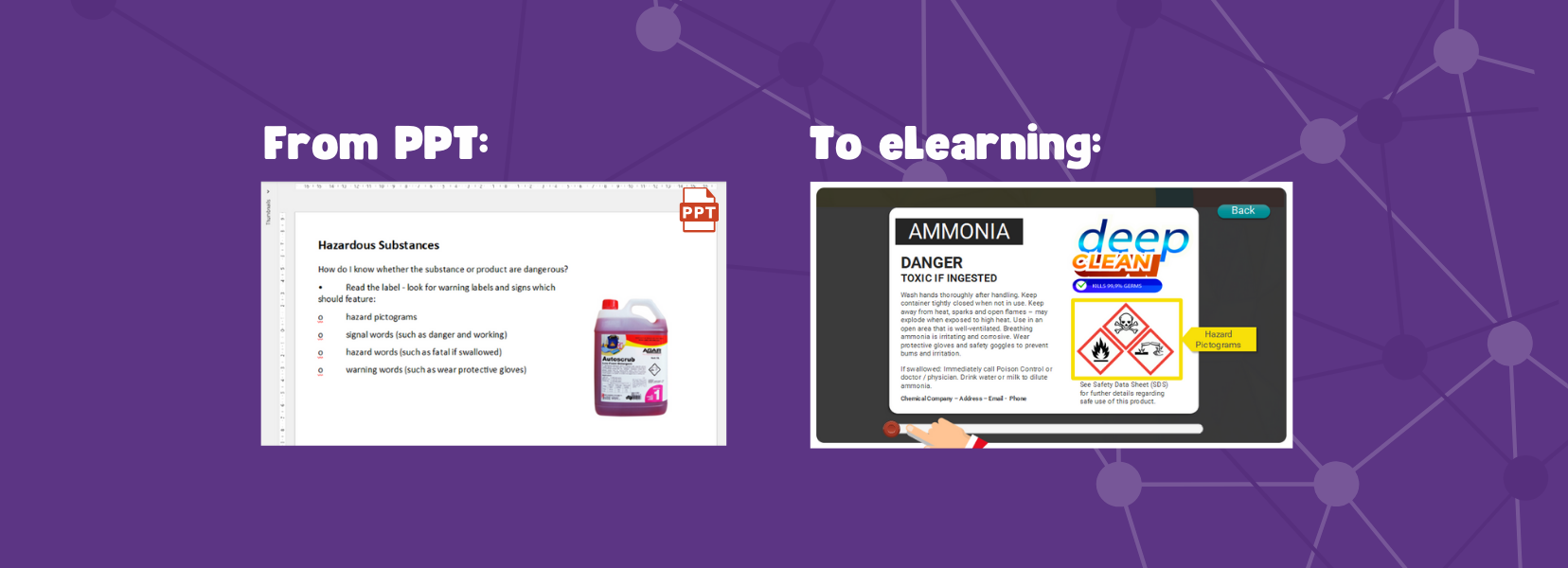
Workers should still have access to the complete procedure, but an induction or training module should help them understand what the information means in practice.
Good learning requires people to do something with the information
Instead of presenting several pages of text, a digital learning experience might ask a worker to:
- identify hazards within a realistic workplace scene
- select the correct control for a situation
- follow the steps of a procedure in the correct order
- decide how to respond when conditions change
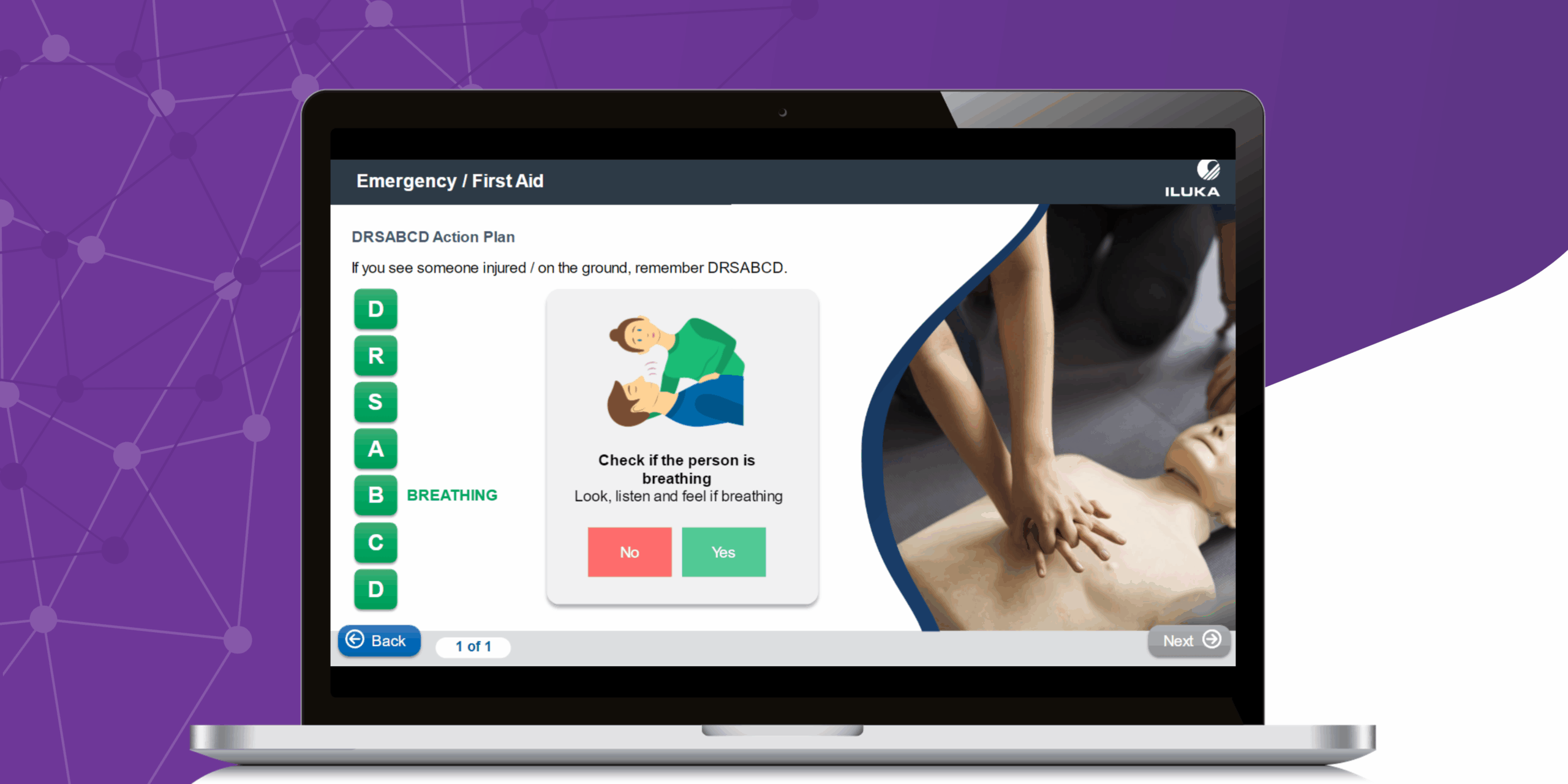
- locate an emergency muster point on a site map
- practise reporting a hazard or incident
- respond to a realistic workplace conversation
These activities require the learner to do something with the information. They also give the organisation better evidence of what the learner understood at the time of training.
Consistency across sites and workforces
Face-to-face delivery will continue to play an important role in workplace training, particularly when practical demonstrations, site familiarisation or competency assessment are required.
However, relying entirely on supervisors or trainers to repeatedly deliver the same information can introduce inconsistency.
One presenter may explain an issue in detail while another moves through it quickly. Information may be added, omitted or interpreted differently. Delivery may also be affected by time pressures, roster changes and operational demands.
Digital learning creates a consistent foundation.
Every worker receives the same core information, examples and assessment activities. Face-to-face time can then be used for site-specific discussion, questions, practical activities and verification of competency where required.
Preparing contractors before they arrive
Contractor mobilisation can be time-consuming for both the organisation and the contractor.
Where appropriate, digital onboarding allows contractors to complete relevant introductory content before arriving at the workplace. The organisation can confirm completion in advance and reserve on-site time for information that must be delivered or verified in person.
This does not mean replacing all site-based induction activities. It means using each delivery method for the purpose it serves best.
General organisational expectations, key policies, behavioural standards and introductory safety information may be delivered before arrival. Site access, changing conditions, local hazards and practical requirements can then be addressed at the workplace.
Keeping learning current
WorkSafe WA recommends regularly reviewing site induction training to determine whether the content remains relevant. It also identifies several situations in which workers may require refresher training, including after an extended absence, a site change or a change in the working environment.
Training should not be treated as a one-off project that is published and forgotten.
A sustainable learning process connects training content with:
- changes to legislation
- revised procedures
- changes to site conditions
- new equipment or technology
- incident findings
- emerging hazards
- changes to organisational expectations
When a relevant change occurs, the organisation should be able to identify the affected learning, update it and provide targeted refresher training where required.
Short digital refreshers can also turn toolbox talk content into learning that is available across different sites, rosters and shifts, with completion recorded through a learning management system.
Think beyond induction
The same approach can be applied across an organisation.
Workplace knowledge can be transformed into:
- employee and contractor inductions
- company and project orientations
- procedure and SOP training
- critical-risk learning
- digital toolbox talk refreshers
- safety and compliance modules
- leadership and supervisor development
- behavioural and respectful workplace training
- role-specific learning pathways
- refresher learning following operational change
The objective is not to put more training online. It is to work out what people genuinely need to know and do, then choose the most effective way to help them learn it.
Is it time to review your induction?
Consider the following questions:
- Is your induction tailored to different workers, roles and sites?
- Does it test understanding or mainly record attendance?
- Can contractors complete appropriate content before arriving?
- Are workers expected to read large amounts of technical information?
- Can managers easily see who has completed the required training?
- Is the training reviewed when procedures or site conditions change?
- Does it prepare workers to make decisions in realistic situations?
- Are supervisors repeatedly delivering information that could be provided more consistently?
If several of these questions identify a gap, the solution may not be another standard course. It may be a more effective way of turning your organisation’s knowledge into learning.
Future Institute designs custom interactive eLearning for inductions, contractor onboarding, procedures, toolbox talk refreshers and workforce development. We can help you transform existing workplace content into practical learning that is clear, engaging, trackable and easier to maintain.